
Not all candy is made the same way. Some candies contain ingredients that may not fit every diet. This can make it hard to know whether a candy is vegan, vegetarian, or neither.
Vegan and vegetarian candy may sound similar, but they have different ingredient rules. Understanding the difference can help you avoid confusion.
This guide will explain the difference in a simple way so you can make better choices when buying candy.
What Is Vegetarian Candy?
Vegetarian candy is candy that does not contain ingredients made from meat, fish, or poultry. In simple terms, it avoids direct animal flesh-based ingredients. However, vegetarian candy can still include some animal-derived ingredients.
For example, many vegetarian candies may contain milk, cream, butter, honey, or egg whites. These ingredients are not derived from meat, so they are usually acceptable in a vegetarian diet. This is why many chocolates, caramels, toffees, and creamy candies can be vegetarian.
The important thing to remember is that vegetarian candy is not always vegan. A milk chocolate bar may be vegetarian because it does not contain meat, but it is not vegan because it contains dairy. So, if you follow a strict plant-based diet, you should always check the ingredient label before buying candy.
What Is Vegan Candy?
Vegan candy is candy that does not contain any animal-derived ingredients. This means it avoids dairy, gelatin, honey, egg whites, beeswax, shellac, and carmine. It is made for people who follow a fully plant-based lifestyle.
Vegan candy often uses plant-based alternatives instead of animal-based ingredients. For example, pectin or agar-agar may be used instead of gelatin, and plant-based milk may be used instead of dairy milk. Some vegan candies are also marked with a certified vegan label to make them easier to identify.
It is important to remember that vegan candy is not always the same as healthy candy. It can still contain sugar, artificial flavors, or food coloring. The main difference is that vegan candy avoids animal-derived ingredients.
Vegan vs. Vegetarian Candy: Quick Comparison
Feature | Vegan Candy | Vegetarian Candy |
| Contains dairy? | No | Sometimes |
| Contains eggs? | No | Sometimes |
| Contains honey? | No | Sometimes |
| Contains gelatin? | No | Usually avoided, but label checking is needed |
| Suitable for plant-based diets? | Yes | Not always |
| Label checking needed? | Yes | Yes |
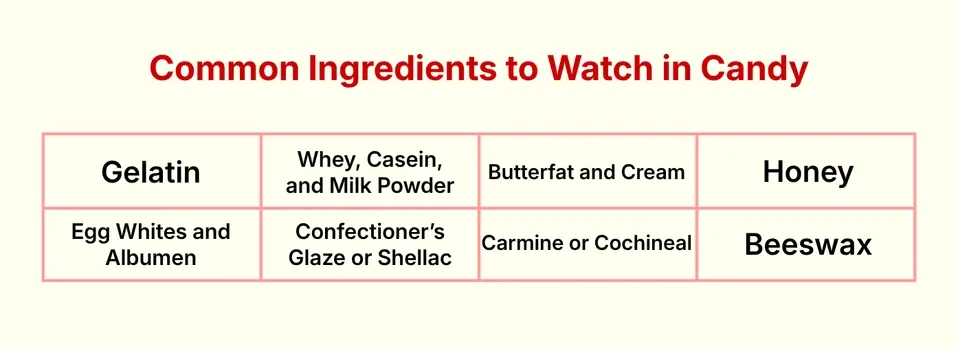
Common Ingredients to Watch in Candy
Many candies contain ingredients that are not easy to recognize at first. Some ingredients may come from milk, insects, eggs, or other animal sources. If you want vegan or vegetarian candy, it is important to check the label carefully.
1. Gelatin
Gelatin is one of the most common ingredients to watch for in candy. It is often used to give gummies, marshmallows, jelly candies, and chewy sweets their soft texture.
Gelatin is usually made from animal collagen, so it is not suitable for vegan candy. Many vegetarians also avoid it. Vegan-friendly candies may use pectin, agar-agar, or starch instead.
2. Whey, Casein, and Milk Powder
Whey, casein, and milk powder are dairy-based ingredients. They are often found in chocolate, creamy candies, caramels, and coated sweets.
These ingredients may be acceptable in vegetarian candy, but they are not vegan. If you are looking for vegan candy, choose products labeled dairy-free or plant-based.
3. Butterfat and Cream
Butterfat and cream are also dairy ingredients. They are commonly used to make candy taste rich, smooth, and creamy.
You may find them in toffee, fudge, caramel, and milk chocolate. These ingredients can be vegetarian, but they are not vegan.
4. Honey
Honey is used as a sweetener in some candies. It may appear in hard candies, lozenges, chocolate, or natural-style sweets.
Many vegetarians accept honey, but vegans usually avoid it because it comes from bees. Vegan candies often use sugar, corn syrup, maple syrup, or other plant-based sweeteners instead.
5. Egg Whites and Albumen
Egg whites are sometimes listed as albumen on ingredient labels. They can be used in nougat and marshmallow-style sweets, as well as some fluffy or chewy candies.
Egg-based ingredients may be vegetarian, but they are not vegan. If you follow a vegan diet, look for candies that clearly say "egg-free" or "vegan".
6. Confectioner’s Glaze or Shellac
Confectioner’s glaze, also known as shellac, is used to give candy a shiny coating. It is often found on jelly beans, coated chocolates, and glossy hard candies.
Shellac comes from insects, so it is not vegan. Some vegetarians may also choose to avoid it, depending on their diet preferences.
7. Carmine or Cochineal
Carmine and cochineal are red colorings used in some candies. They may also be listed as natural red color, carmine lake, or E120.
These colorings come from insects, so they are not vegan. Many vegetarians also avoid them, especially if they want candy without insect-derived ingredients.
8. Beeswax
Beeswax is used in some candies as a coating or glazing ingredient. It helps give candy a smooth texture and shiny finish.
Beeswax is usually accepted by some vegetarians, but it is not vegan because it comes from bees. Vegan candy may use plant-based waxes, such as carnauba wax, instead.
How to Identify Vegan Candy
The easiest way to identify vegan candy is to check the ingredient label. Look for candies that clearly say “vegan,” “plant-based,” or “dairy-free.” A certified vegan label can also make the choice easier.
You should also look for common non-vegan ingredients. Avoid ingredients like gelatin, milk powder, whey, casein, cream, honey, egg whites, shellac, carmine, and beeswax. These ingredients come from animals or insects, so they are not suitable for vegan candy.
Do not rely only on the candy’s appearance. A candy may look simple, fruity, or plant-based but still contain gelatin, shellac, or carmine. Gummies, jelly beans, coated chocolates, and shiny candies are good examples where label checking is important.
You can also check the brand’s website if the label is not clear. Some brands provide vegan product lists or allergen information online. This is helpful when ingredients like “natural flavors” or “glaze” are not fully explained.
For strict vegan shoppers, certification is the safest option. Certified vegan candies are checked for animal-derived ingredients. This gives more confidence when choosing candy for a vegan lifestyle.
Popular Vegan and Vegetarian Candy
Popular Vegan Candy
- Chocolate candy: Hershey’s Plant-Based Oat Chocolate, Reese’s Plant-Based Peanut Butter Cups, dairy-free dark chocolate, and vegan chocolate bars. Hershey’s describes its plant-based Reese’s cups as oat chocolate confections made for a plant-based lifestyle.
- Gummy candy: YumEarth Organic Fruit Snacks, pectin-based gummies, vegan gummy bears, and some Swedish Fish. PETA lists Swedish Fish as vegan-friendly in some cases, but also notes that some versions may contain beeswax, so the label should be checked.
- Hard candy: Jolly Rancher Hard Candy, Smarties, Dum Dums, Atomic Fireballs, and fruit-flavored hard candies. These are common choices for people seeking simple, vegan-friendly candy options.
- Sour candy: Sour Patch Kids, SweeTARTS Original, Pixy Stix, and sour belts without gelatin. These candies are often popular because many sour candies do not use dairy or gelatin, but the coating and colors should still be checked.
- Chewy candy: Airheads, Dots, Now and Later, Jujubes, and Red Vines. These are popular chewy options that are often listed as vegan-friendly candy choices.
- Lollipops: Dum Dums, Charms Blow Pops, Jolly Rancher Lollipops, and YumEarth Organic Pops. These are easy options to check because many lollipops have shorter ingredient lists.
Popular Vegetarian Candy
- Chocolate candy: Hershey’s Milk Chocolate, M&M’s Milk Chocolate, Reese’s Peanut Butter Cups, Snickers, and milk chocolate bars. These are usually vegetarian for people who allow dairy, but they are not vegan because many contain milk-based ingredients.
- Caramel and toffee candy: Milk caramels, soft toffees, caramel chews, and chocolate-covered caramel candies. These are common vegetarian-style candies because they often use milk, butter, or cream for a rich texture.
- Creamy candy: Fudge, cream-filled chocolates, nougat bars, and milk-based chewy candies. Snickers, for example, lists milk chocolate, skim milk, lactose, milk fat, and egg whites among its ingredients.
- Hard candy: Honey hard candies, butterscotch candies, cream-flavored hard candies, and fruit hard candies with non-vegan glaze. These can be vegetarian when they do not contain gelatin or insect-based colors.
- Gummy candy: Gelatin-free gummies, fruit chews, jelly sweets, and pectin-based gummies. These may be vegetarian when they avoid gelatin, but they still need label checking for beeswax, shellac, or carmine.
- Lollipops: Honey lollipops, cream-flavored lollipops, and regular fruit lollipops. Some may be vegetarian, but shiny coatings and colors should be checked before buying.
Common Myths About Vegan and Vegetarian Candy
There are many common misunderstandings about vegan and vegetarian candy. Here are some common Myths About Vegan and Vegetarian Candy:
1. Vegan and Vegetarian Candy Are the Same
Vegan and vegetarian candy are not the same. Vegetarian candy may still contain milk, honey, eggs, or beeswax. Vegan candy avoids all animal-derived ingredients.
This is why a candy can be vegetarian but not vegan. For example, milk chocolate may be vegetarian, but it is not vegan because it contains dairy.
2. All Fruit Candies Are Vegan
Many people think fruit-flavored candy is always vegan, but that is not true. Some fruit candies may contain gelatin, carmine, shellac, or beeswax. These ingredients can come from animals or insects.
A candy may taste like strawberry, cherry, or orange, but still include non-vegan ingredients. Always check the ingredient label rather than relying solely on the flavor.
3. Vegan Candy Is Always Healthy
Vegan candy is not always healthy. It may avoid animal-derived ingredients, but it can still contain sugar, corn syrup, artificial flavors, and artificial colors. Vegan simply means the candy does not contain animal-based ingredients.
This does not mean you can eat unlimited amounts of it. Like regular candy, vegan candy should still be enjoyed in moderation.
4. Vegetarian Candy Never Contains Animal Ingredients
Vegetarian candy can still contain animal-derived ingredients. Dairy, honey, eggs, and beeswax are common examples. These ingredients are usually accepted by many vegetarians.
However, some vegetarians may avoid certain ingredients like gelatin, carmine, or shellac. This is why personal diet rules and label checking are both important.
5. Dark Chocolate Is Always Vegan
Dark chocolate is often seen as vegan, but it is not always vegan. Some dark chocolate products may still contain milk fat, butter oil, whey, or other dairy ingredients. This can make them unsuitable for a vegan diet.
If you want vegan dark chocolate, check the label carefully. Look for dairy-free or certified vegan options when possible.
6. Gelatin-Free Means Vegan
Gelatin-free candy is not always vegan. It may still contain milk, honey, beeswax, shellac, or carmine. Removing gelatin is only one part of making candy vegan.
This is common with gummies, jelly beans, and chewy candies. Even if the candy uses pectin instead of gelatin, the rest of the ingredient list still matters.
Final Thoughts
Choosing between vegan and vegetarian candy does not have to be confusing. The main difference is simple: vegan candy avoids all animal-derived ingredients, while vegetarian candy may still contain some.
The best way to choose the right candy is to read the ingredient label carefully. Ingredients like gelatin, whey, casein, shellac, carmine, and beeswax can easily be missed if you only look at the flavor or packaging.
Whether you choose vegan candy or vegetarian candy, knowing what to check makes shopping easier. Once you understand the common ingredients, you can enjoy your favorite sweets with more confidence.
FAQs
Is Vegan Candy Healthier Than Vegetarian Candy?
Vegan candy is not always healthier than vegetarian candy. It may avoid animal-derived ingredients, but it can still contain sugar, artificial flavors, and food coloring. The healthier choice depends on the full ingredient list.
Is Chocolate Vegan or Vegetarian?
Chocolate can be vegan or vegetarian, depending on the ingredients. Dark chocolate may be vegan if it does not contain milk, butterfat, whey, or other dairy ingredients.
Are Gummy Candies Vegan or Vegetarian?
Gummy candies can be vegan, vegetarian, or neither. Many traditional gummies contain gelatin, which is not suitable for vegan candy and is often avoided by vegetarians.
Are Sour Candies Vegan?
Some sour candies are vegan, but not all of them. Many sour candies do not contain dairy or gelatin, but some may still include shellac, carmine, beeswax, or other non-vegan ingredients.

Vegan vs. Vegetarian Candy: What’s the Real Difference?